Calculator
New Home GST Rebate Calculator
Calculate your GST rebate on a newly built Canadian home under the 2026 Bill C-4 rules, combined with your Home Buyers' Plan (HBP) tax savings.
Try it now
Canadian mortgage math done the Canadian way: semi-annual compounding, CMHC insurance premiums, amortization schedules, and prepayment savings under the 2026 rules.
Calculate Canadian mortgage payments using statutory semi-annual compounding, CMHC default insurance premiums, and the interest saved by prepayments.
Calculate your GST rebate on a newly built Canadian home under the 2026 Bill C-4 rules, combined with your Home Buyers' Plan (HBP) tax savings.
Try it nowCheck your eligibility for the OSFI mortgage stress test exemption on straight switch renewals and model qualifying rates vs contract rates.
Try it nowCompare investments, retirement accounts, tax regimes, insurance types, and mortgages side-by-side with interactive calculators and real-time projections.
Explore localized financial terms, definitions, and concepts specific to Canada. Search and understand key finance vocabulary for better planning.
Three things set Canada apart: the Interest Act's semi-annual compounding rule, CMHC insurance tiers, and the CRA's registered-account limits.
The effective rate on a Canadian fixed mortgage is (1 + r/2)² − 1, converted to a monthly equivalent for payment math. Below 20% down, CMHC premiums of 2.8% to 4.0% of the loan are added to principal, meaning you pay interest on the insurance for the full amortization. The calculators separate that cost out so you can see what a bigger down payment actually buys.
Income tax stacks federal brackets on provincial schedules, each with its own basic personal amount ($16,452 federally for 2026). Payroll deductions add CPP at 5.95% up to the $74,600 pensionable earnings ceiling (with a $3,500 exemption) and EI at the employee rate up to $68,900 of insurable earnings. RRSP contributions come off taxable income at your top marginal rate, which is what makes the deduction worth more to higher earners.
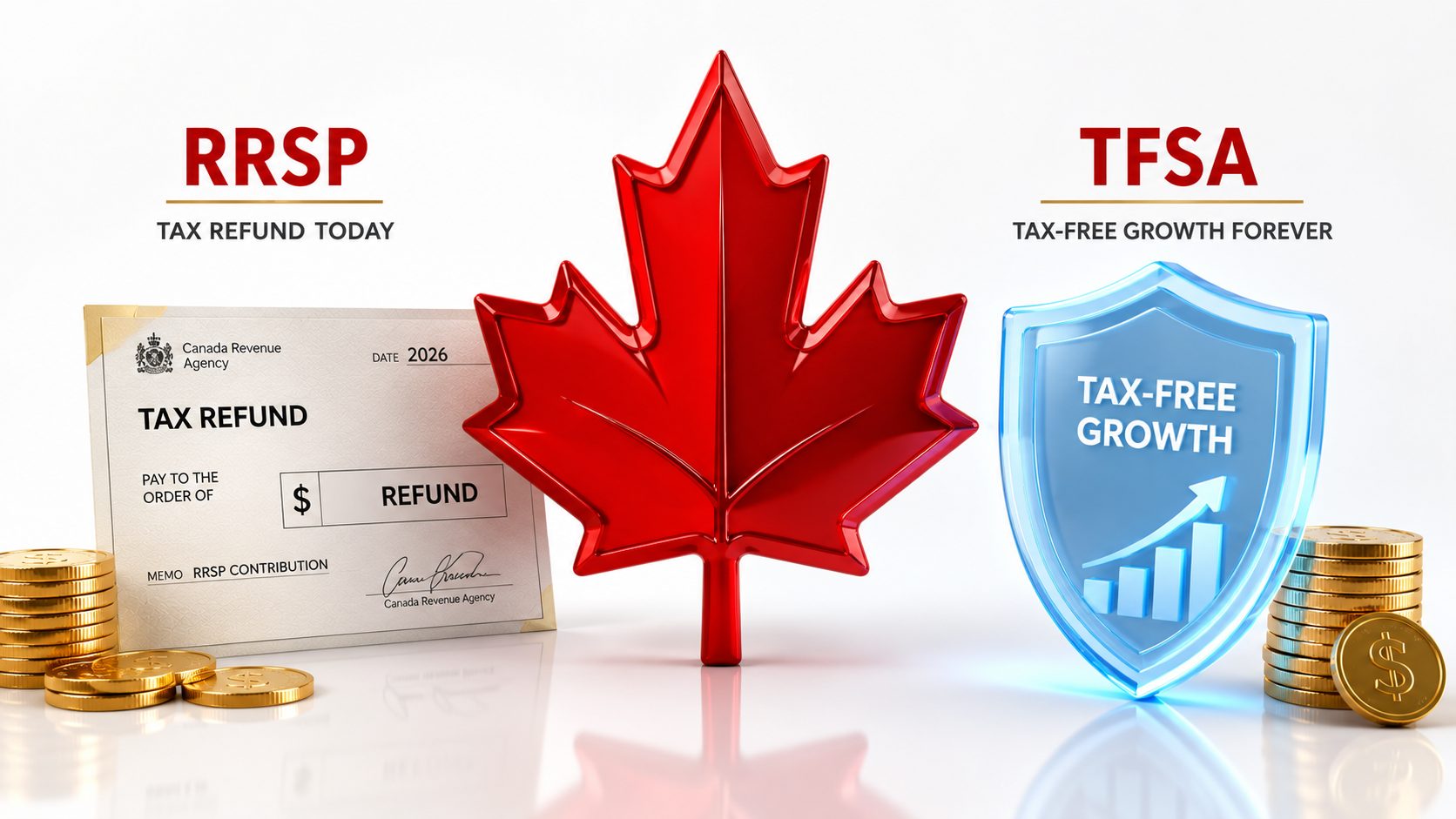
The ordering logic for most Canadians: employer-matched RRSP first (free money), then TFSA (tax-free forever, flexible), then unmatched RRSP if your current tax rate beats your expected retirement rate. Outside registered accounts, 50% of gains are taxable at your marginal rate; deferral is the lever, since no tax applies until you sell.