Calculator
UK BNPL Consumer Rights Simulator
Check your consumer protections, affordability requirements, and late fees under the UK's July 2026 Deferred Payment Credit rules.
Try it now
Mortgage repayments, overpayment savings, and Stocks & Shares ISA growth, priced with the 2026-27 HMRC rules rather than generic assumptions.
Calculate monthly mortgage repayments, amortization schedules, and the interest saved by overpaying, benchmarked against current UK rates.
Project tax-free compounding inside a Stocks & Shares ISA against a taxable General Investment Account, with regular monthly contributions or lump sums.
Compare investments, retirement accounts, tax regimes, insurance types, and mortgages side-by-side with interactive calculators and real-time projections.
Explore localized financial terms, definitions, and concepts specific to United Kingdom. Search and understand key finance vocabulary for better planning.
HMRC's 6-April-to-5-April tax year sets every number here. These tools compute mortgage costs, ISA growth, and the tax wedge between sheltered and unsheltered investing.
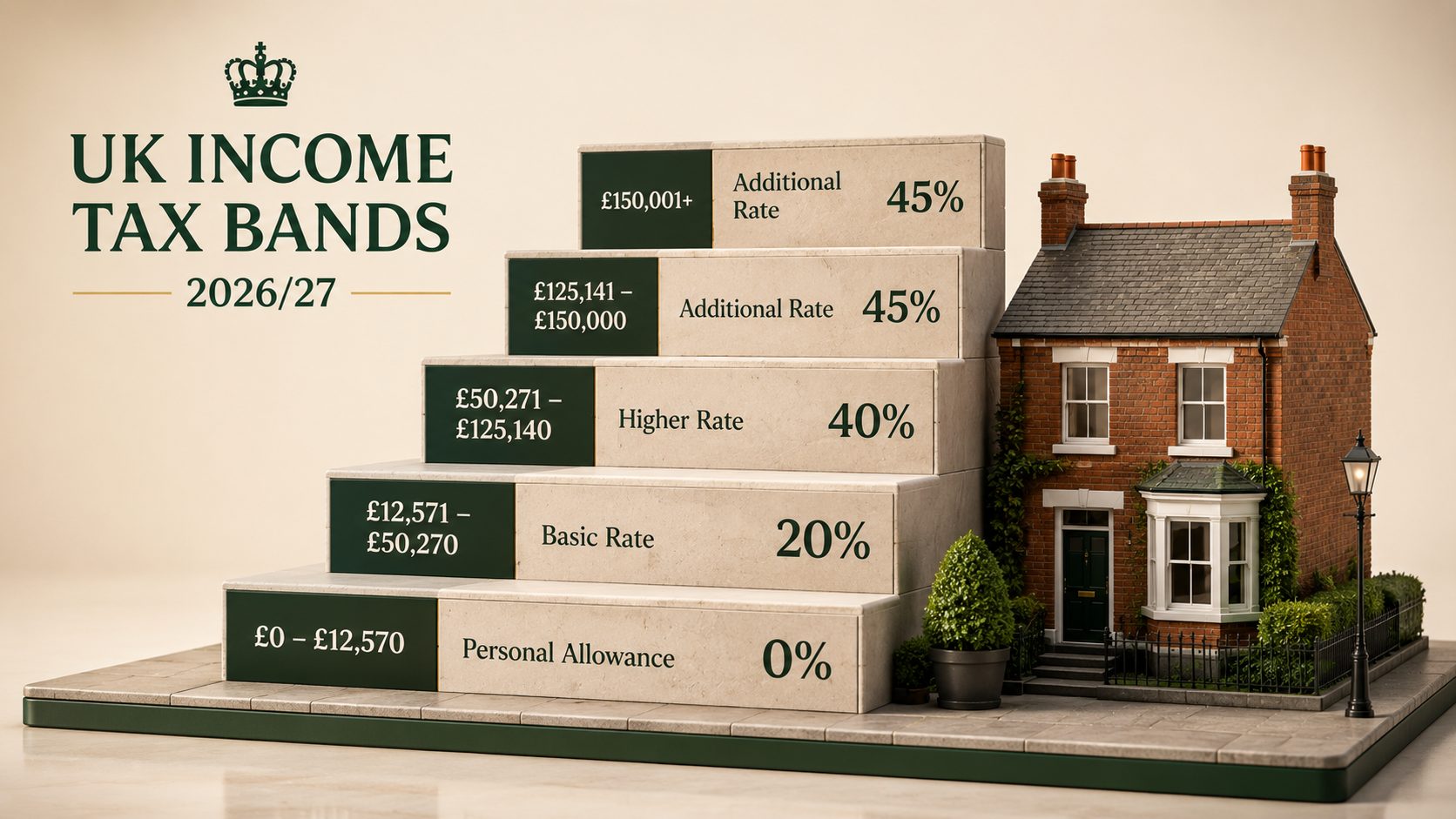
Take-home pay maths subtracts the £12,570 Personal Allowance, then applies 20%/40%/45% bands at £50,270 and £125,140. Class 1 NI runs at 8% between £12,570 and £50,270 and 2% above. The hidden trap is the £100,000-£125,140 taper zone: each £2 of extra income removes £1 of allowance, so the marginal rate there is effectively 60% before NI.
UK repayment mortgages use standard monthly compounding, and lenders stress-test affordability at rates 1% to 3% above their reversion rate under FCA rules. Overpayment maths is where the leverage is: extra principal payments early in a 25-year term avoid decades of compounding interest, which is why a modest monthly overpayment can cut years off the term.
Outside an ISA, dividends above the £500 allowance are taxed at 8.75% to 39.35% and gains above £3,000 at 18% or 24%. Inside an ISA all of that disappears, at £20,000 of new money per year. Over a 20-year horizon the tax drag difference alone can exceed the total contributions of the early years. The calculators here put a number on that gap for your own figures.