Calculator
UK BNPL Consumer Rights Simulator
Check your consumer protections, affordability requirements, and late fees under the UK's July 2026 Deferred Payment Credit rules.
Try it nowCheck late fees and consumer protections under the UK's new July 2026 Deferred Payment Credit (DPC) FCA rules for BNPL.
One missed Klarna instalment costs £5. Three missed instalments on a £30 basket cost £7.50 total, because the 25% cap says so, and since 15 July 2026 every regulated BNPL plan carries free ombudsman access and, above £100, Section 75 joint liability. Set your purchase size, term, and missed payments; the calculator prices your worst case and maps the rights that now come with it.
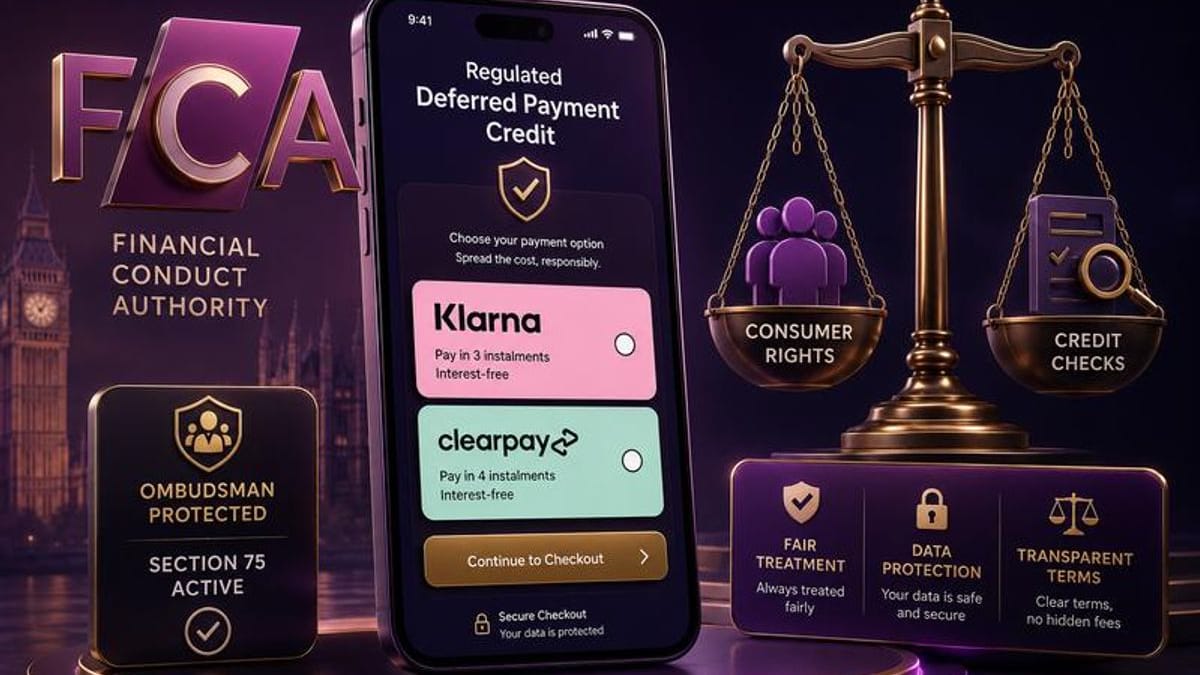
Effective July 15, 2026, the UK Financial Conduct Authority (FCA) has brought third-party interest-free Buy Now, Pay Later products under official regulation as Deferred Payment Credit (DPC) agreements. Consumers now get clear, transparent information, mandatory affordability checks, and Ombudsman access.
Since the rules took effect on July 15, 2026, BNPL users now enjoy several structural safeguards: 1. Financial Ombudsman Service (FOS) access: If a dispute with a BNPL lender is unresolved, you can escalate it to the FOS for free. 2. Affordability assessments: Lenders must verify your creditworthiness to prevent credit overload. 3. Section 75 protection: Purchases over £100 funded via BNPL gain credit card-style joint liability protections for refunds or merchant breaches.
Although BNPL is interest-free, missing payments triggers late fees. Klarna caps missed payment fees at £5 (max 25% of purchase or £10 total), while Clearpay and PayPal Pay in 3 charge up to £6 per occurrence. The new FCA rules mandate that these fees be disclosed upfront and capped to prevent compounding debt spirals.
Before that date, BNPL lived outside consumer credit law: no mandatory affordability checks, no ombudsman, no joint liability if the merchant vanished. The FCA's Deferred Payment Credit regime moved all of it inside: providers need authorisation, must run proportionate credit checks, and answer to the Financial Ombudsman Service for free when their own 8-week complaints process fails you.
The practical translation: a dispute is no longer a customer-service dead end. Complain to the provider first; if eight weeks pass or you get a final answer you disagree with, FOS takes the case at no cost to you.
One boundary to know: the rules apply to agreements entered into from 15 July 2026 onwards. A plan you opened in June 2026 stays under the old voluntary regime for its short life, which is one more reason the date on the agreement matters more than the provider's logo.
Buy something for £100.01 to £30,000 on regulated credit and the lender is jointly liable with the merchant under Section 75 of the Consumer Credit Act. Merchant goes bust before delivery? The BNPL provider owes you the refund. At £99.99, that shield does not exist and you join the administrators' queue with everyone else.
This is the quiet argument for putting larger BNPL purchases just over the line as a single transaction rather than splitting them, and for keeping the order confirmation: joint liability claims live and die on paperwork. Note the ceiling too: purchases above £30,000 fall outside Section 75 entirely, though almost no BNPL plan ever reaches it.
A £5 fee is trivial. Six years of a default on your credit file is not: it moves your mortgage pricing band, your car finance rate, sometimes your rental application. All three credit reference agencies now receive BNPL payment history, on-time and missed alike.
So the discipline is simple: treat every BNPL plan as the credit agreement it legally is. Two or three overlapping plans of £40 each feel like nothing individually; a bank underwriter sees a stack of active credit commitments. If a payment is going to slip, contact the provider before the due date, because Consumer Duty forbearance pauses the damage that silence guarantees.
BNPL's danger was never the interest, there is none. It is the arithmetic of overlap. Each plan is small and each instalment lands on a different day, so a £600 monthly commitment can assemble itself out of £35 pieces without a single decision that felt like borrowing £600. Mortgage underwriters now see those commitments listed on your file, and they treat them exactly as the credit they are.
The regulated regime helps at the edges, providers must now assess affordability and see more of your existing credit, but no rule stops you approving your own fifth plan at midnight. The working fix is a self-imposed cap: one active plan per provider, or a simple note listing every live instalment and its date. If writing the list feels tedious, that is the signal the list is already too long.
Miss a Buy Now Pay Later instalment and the meter starts: your provider's flat fee per miss, multiplied by the number of misses, capped so fees can never exceed a quarter of the purchase price. Klarna charges £5 per missed payment; Clearpay, PayPal Pay in 3, and most others charge £6.
The calculator runs that exact arithmetic for your purchase, then shows the piece that matters more than fees: which statutory protections your plan carries now that BNPL became FCA-regulated Deferred Payment Credit on 15 July 2026.
Chloe buys a £30 outfit on a £5-per-miss provider and, in a bad month, misses all 3 instalments before payday arrives.
Raw fees would be 3 x £5 = £15. The 25% cap says fees cannot exceed £30 x 0.25 = £7.50, so £7.50 is what she owes in fees.
The bigger consequence is invisible: each miss is reported to Experian, Equifax, and TransUnion, and a default sits on her file for six years, quietly raising the price of the mortgage she wants in two years.
If money is genuinely tight, the regulated regime works in her favour: telling the provider triggers Consumer Duty forbearance obligations, which beats silently missing payment three. A short call can convert a spiralling plan into a paused one, with fees frozen and the credit-file damage contained while a payment arrangement is agreed. Silence is the only strategy with no upside, and it is also the only one the provider cannot help with.
Review the glossary of terms used in the calculation model below. Click on highlighted links to read more in-depth definitions in our financial glossary:
| Parameter | Definition & Context |
|---|---|
| Purchase Amount (£) | The transaction value of the goods bought on instalments. It drives the 25% fee cap and decides whether Section 75 joint liability (over £100) applies. |
| Missed Payments | Instalments not paid by their due date. Each one triggers the provider's flat fee and a mark on your credit file. |
The rules and figures on this page are researched from official primary sources: