What this choice actually costs you
What the 2.5% floor really costs over twenty years
Ravi, 32, has $40,000 in his OA: $20,000 locked as the untouchable CPFIS floor, $20,000 investable. Leaving the excess at 2.5% grows it to about $32,800 by age 52. Invested in a CPFIS-approved global equity fund netting 6.5%, the same $20,000 reaches roughly $70,500.
The $37,700 difference is not a rounding error: it is nearly twice the original stake, and it is the recurring price of parking long-horizon money at a rate designed for capital preservation. With core inflation historically near 2%, the OA floor holds purchasing power; it does not build it.
The honest counterweight: the 2.5% line on the chart never dips. The 6.5% line is an average drawn through years like 2008 (−40%) and 2020. The gap is real, but it is compensation for holding through exactly those years, which is why the timeline filter matters more than the return projection.
Three doors for the same dollar, and one is marked 'no return'
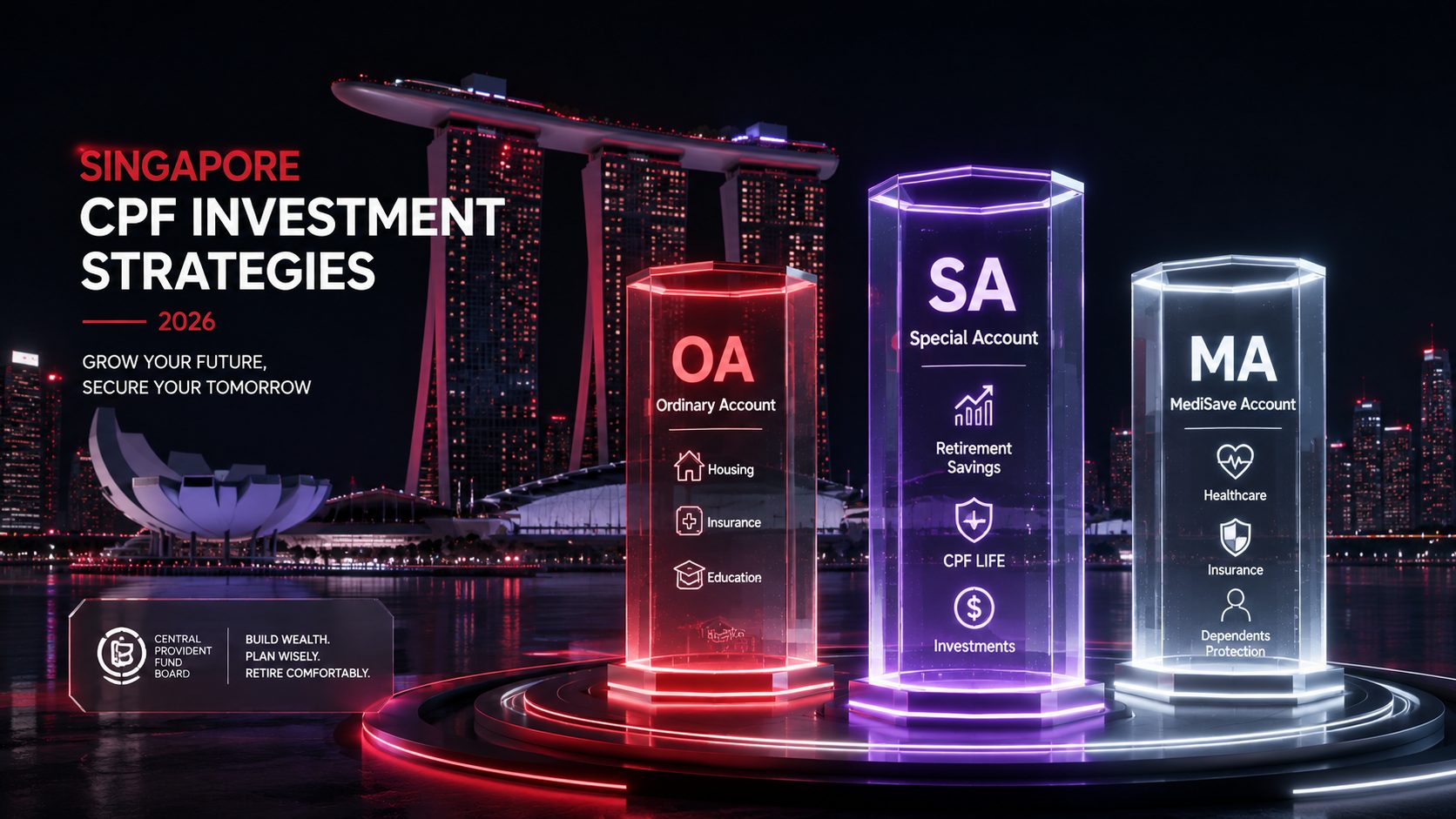
Every excess OA dollar has three destinations. Door one: stay at 2.5%, liquid for housing. Door two: transfer to the Special Account at a guaranteed 4% (floor extended through 31 December 2026), but the transfer is permanently irreversible, the money exits housing reach, and the door only exists before 55, since SA accounts for 55+ were closed in early 2025. Door three: CPFIS, with market risk and market returns, but reversible: sell and the cash is back in OA for a flat.
The 4% door is underrated and oversold at once. For a conservative saver who was never going to invest, converting 2.5% into 4% guaranteed is the single cleanest yield upgrade in Singapore finance. For someone who might upgrade flats in eight years, it is a trap: that money will never again pay a downpayment.
Ranked by expected 20-year outcome on $20,000: CPFIS ETF ~$70,000 (volatile), SA transfer ~$43,800 (guaranteed, locked), OA ~$32,800 (guaranteed, liquid). Pick by which constraint binds you: liquidity, nerves, or neither.
The fee floor: why $100-a-month CPFIS investing loses to doing nothing
CPFIS charges fixed tolls: an agent-bank custody fee of roughly $2-$2.50 a quarter, a similar charge per transaction, plus brokerage commission on each trade. On a $12,000 lump sum these fees vanish into decimals. On $100 a month they are a wall: roughly $30-$40 a year of fixed costs is an instant 2.5-3% drag. The entire OA floor rate, burned before the market opens.
The practical thresholds: invest in tranches of $1,000-$2,000 or more, or use an integrated platform (Endowus and similar robo-advisors access approved unit trusts without per-trade agent-bank fees) if you want genuine monthly dollar-cost averaging from OA.
Also read the approved list before imagining a portfolio: CPFIS permits vetted SGX-listed ETFs and unit trusts, not US-listed favourites like VOO. The vetted index options are perfectly serviceable for a global or local core; the point of CPFIS investing is boring exposure at scale, not stock-picking with retirement money. Profits, when they come, land back in your OA: this whole exercise raises your CPF's growth rate, not your spending money.