How Can You Maximize Your Tax Savings Under Section 80C in FY 2026-27?
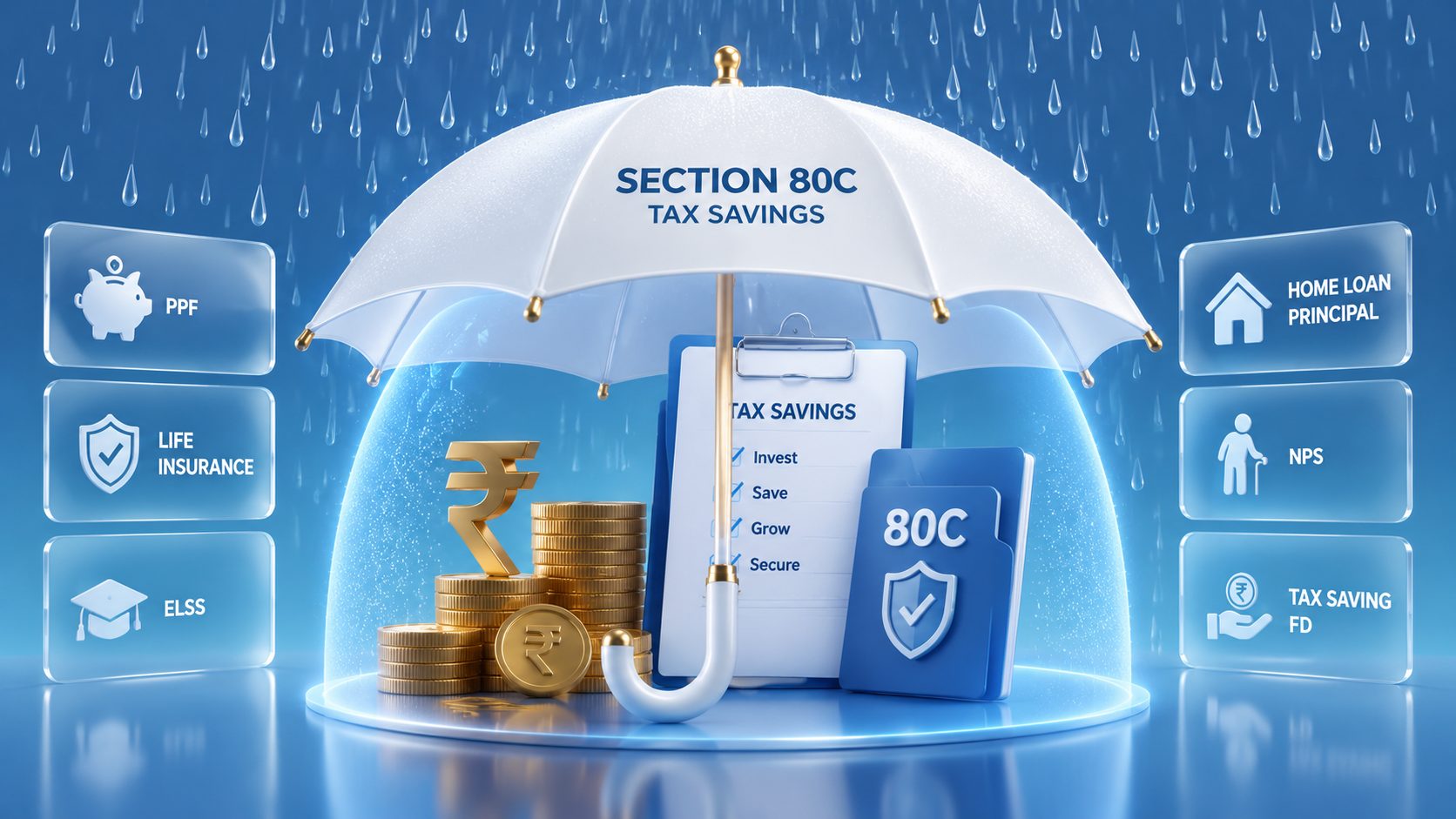
To maximize your tax savings under Section 80C in FY 2026-27, you must select the Old Tax Regime, contribute to tax-saving instruments up to the statutory limit of ₹1.5 Lakhs, and match your investments to your risk appetite and liquidity needs. Section 80C is the most popular tax-saving provision in India, allowing taxpayers to significantly reduce their taxable income by investing in government-backed schemes, equity mutual funds, and essential household expenses.
Quick Answer Summary
- Maximum Limit: You can deduct up to ₹1,50,000 per financial year from your gross taxable income under Section 80C.
- Regime Limitation: This deduction is only available under the Old Tax Regime. Under the default New Tax Regime, Section 80C deductions are completely disallowed.
- Top Options: The most common 80C instruments include Public Provident Fund (PPF), Equity Linked Savings Schemes (ELSS), Employee Provident Fund (EPF), National Savings Certificate (NSC), and Sukanya Samriddhi Yojana (SSY).
Comparison of Section 80C Tax-Saving Options
To make an optimal choice, you must compare the returns, lock-in periods, and tax treatment of the primary 80C instruments:
| Instrument | Expected Returns | Lock-in Period | Risk Profile | Tax Status (Entry-Growth-Exit) |
|---|---|---|---|---|
| ELSS (Mutual Funds) | 12% - 15% (Variable) | 3 Years | Market Risk | EET (Growth taxed as LTCG) |
| PPF (Public Provident Fund) | 7.1% (Fixed) | 15 Years | Risk-Free | EEE (100% Tax-Free) |
| EPF (Employee Provident Fund) | 8.1% - 8.25% (Fixed) | Till Retirement | Risk-Free | EEE (Tax-free up to ₹2.5L/yr) |
| SSY (Sukanya Samriddhi) | 8.2% (Fixed) | 21 Years | Risk-Free | EEE (100% Tax-Free) |
| Tax-Saving FD (5-Year) | 6.5% - 7.5% (Fixed) | 5 Years | Risk-Free | EET (Interest is taxable) |
EEE vs. EET Tax Treatment Explained
When evaluating tax-saving options, pay close attention to the tax treatment at three stages: Contribution (Entry), Accumulation (Growth), and Withdrawal (Exit):
- EEE (Exempt-Exempt-Exempt): You get a tax deduction when you invest (Entry), pay zero tax on interest/growth (Growth), and pay zero tax when you withdraw (Exit). PPF and Sukanya Samriddhi Yojana are classic EEE instruments.
- EET (Exempt-Exempt-Taxable): You get a deduction on contribution and pay zero tax during growth, but your withdrawals are taxed. Tax-Saving Fixed Deposits are EET because the interest earned is taxed as ordinary income.
- ELSS Tax Treatment: ELSS is EET because while your contributions are deductible and growth is tax-deferred, your withdrawals are subject to Long-Term Capital Gains (LTCG) tax at 10% (for gains exceeding ₹1.25 Lakhs per year).
Case Study: Rahul's 80C Investment Mix in 2026
Let's return to Rahul, our 28-year-old software developer in Bengaluru. Rahul decides to stick with the Old Tax Regime because his rent is high (claiming ₹1.8 Lakhs HRA) and he wants to save tax.
Rahul plans to maximize his ₹1.5 Lakh Section 80C limit by spreading his investments based on his risk profile:
- Employee Provident Fund (EPF): Rahul's employer automatically deducts 12% of his basic salary for EPF, which totals ₹60,000 for the year. This automatically counts toward Section 80C.
- Equity Linked Savings Scheme (ELSS): To beat inflation, Rahul starts a monthly SIP of ₹5,000 in an ELSS fund, totaling ₹60,000 for the year.
- Public Provident Fund (PPF): For safe, guaranteed tax-free debt exposure, Rahul deposits ₹30,000 into his PPF account.
- Rahul's Total 80C Contribution: ₹60,000 (EPF) + ₹60,000 (ELSS) + ₹30,000 (PPF) = ₹1,50,000
Rahul's ₹1.5 lakh Section 80C mix
- Rahul's Marginal Tax Bracket: 30% (since his taxable income is above ₹10 Lakhs under the Old Regime).
- Tax Saved: ₹1,50,000 × 30% = ₹45,000 (plus cess).
Verdict: By optimizing his 80C mix, Rahul saves ₹46,800 in tax while building a balanced portfolio split between high-growth equities (ELSS) and risk-free debt (PPF & EPF).
Expenses That Qualify Under Section 80C (No Investment Required)
Many taxpayers do not realize that they do not need to invest new cash to claim Section 80C benefits. Several everyday expenses automatically qualify:
- Home Loan Principal Repayment: While home loan interest is deducted under Section 24b, the principal component of your monthly EMI is deductible under Section 80C.
- Children's School Tuition Fees: Tuition fees paid to any school, college, or university in India for up to two children qualify for deduction.
- Stamp Duty and Registration Charges: The fees paid to register a new home purchase are deductible in the year the property is acquired.
Use the India Income Tax Calculator to model your salary and see how Section 80C deductions reduce your tax liability under the Old Regime.
Advanced Strategic Implementation & Optimization for Section 80C
Section 80C is the most popular tax-saving section under the Old Regime, but it requires allocating capital to specific financial products.
Section 80C Investment Checklist
- Max out the ₹1.5 Lakh Limit: Allocate contributions across EPF, PPF, ELSS, and home loan principal repayments.
- Use ELSS for Wealth Building: Equity Linked Savings Schemes offer the shortest lock-in period (3 years) and high growth potential.
- Track Lock-in Periods: Ensure you can lock up capital in PPF (15 years) or tax-saving FDs (5 years) without liquidity issues.
Step-by-Step Section 80C Allocation
- Assess Mandatory Deductions: Calculate your annual EPF contributions deducted directly from your salary.
- Review Home Loan Repayments: Deduct any home loan principal repaid during the financial year.
- Allocate the Remainder to ELSS: Invest the remaining room in diversified tax-saving mutual funds via SIPs.
- Fund a PPF Account: Deposit any final amounts into a PPF account to secure risk-free, tax-free interest.
Common Pitfalls & Audit Warnings
- Over-contributing: Investing more than ₹1.5 Lakhs in 80C products yields no additional tax benefits.
- Early Exit Penalties: Exiting life insurance policies or ELSS before the maturity dates triggers tax clawbacks.
- Neglecting the Lock-in Schedule: Locking up emergency cash reserves in PPF can lead to severe liquidity crunches.
Advanced Tax Liability Scenario Modeling & Worksheets
This modeling compares different investment allocations under Section 80C to optimize both tax savings and wealth compounding.
Section 80C Portfolio Comparison Table
| Metric | Portfolio A: Safe | Portfolio B: Hybrid | Portfolio C: Growth |
|---|---|---|---|
| Total Contribution | ₹1,50,000 | ₹1,50,000 | ₹1,50,000 |
| PPF Allocation | ₹1,50,000 | ₹50,000 | ₹0 |
| ELSS Allocation | ₹0 | ₹1,00,000 | ₹1,50,000 |
| Lock-in Period | 15 Years | 3 - 15 Years | 3 Years |
| Projected Return | 7.1% (Tax-Free) | ~10.5% | 12.0% |
| Portfolio (Year 15) | ₹4,06,200 | ₹5,84,300 | ₹7,09,800 |
₹1.5 lakh/year for 15 years, by allocation
Step-by-Step Portfolio Setup
Portfolio C: Growth Focus (ELSS Dominant)
- Action: Allocate the entire ₹1.5 Lakhs annual limit to Equity Linked Savings Schemes.
- Lock-in: High liquidity compared to PPF, as funds are unlocked after 3 years.
- Compounding: Leverages India's structural economic growth to target a 12% CAGR, generating over ₹7,09,800 in 15 years.
4. ELSS vs. PPF vs. NPS: Which is the Best Tax-Saving Instrument in 2026?
For Indian taxpayers under the Old Tax Regime, Section 80C provides a variety of investment instruments to claim deductions up to ₹1.5 Lakhs. Understanding the liquidity and return profiles is key:
| Instrument | Asset Class | Lock-in Period | Historical Returns | Tax Status |
|---|---|---|---|---|
| ELSS (Mutual Funds) | Equity | 3 Years | 12% - 15% | EEE (10% LTCG tax on gains > ₹1.25L) |
| PPF (Public Provident Fund) | Debt / Govt | 15 Years | 7.1% (Guaranteed) | EEE (100% Tax-Free) |
| NPS (National Pension System) | Hybrid / Mixed | Till Age 60 | 9% - 11% | EET (60% Tax-Free on exit) |
The Recommendation
- Choose ELSS if you have a high risk tolerance and want the shortest lock-in period.
- Choose PPF if you are risk-averse and want long-term guaranteed, tax-free debt allocation.
- Choose NPS if you want to lock away funds strictly for retirement and use additional tax sections.
5. How to Use Section 80CCD(1B) to Claim an Extra ₹50,000 Deduction for NPS
While Section 80C is capped at ₹1.5 Lakhs, you can claim an additional deduction of up to ₹50,000 under Section 80CCD(1B) by contributing to the National Pension System (NPS) Tier-1 account.
This is an exclusive deduction that operates over and above the ₹1.5 Lakhs 80C limit. For someone in the 30% tax bracket, investing ₹50,000 in NPS under this section saves an additional ₹15,000 in tax annually, while building a retirement nest egg.
Stacking 80CCD(1B) on top of 80C
6. Are Section 80C Deductions Still Relevant Under the New Tax Regime Slabs?
With the government structuring the New Tax Regime to be the default choice, Section 80C deductions have been fully eliminated under the New Regime.
If you opt for the New Tax Regime, you should stop investing in financial products purely for "tax saving" purposes. Instead, shift your focus to wealth maximization. You no longer need to lock up money in low-yield insurance products (like traditional LIC policies) or tax-saver FDs. Invest in open-ended mutual funds or equity schemes based on your financial goals rather than tax lock-ins.
7. How Section 80D Deductions Differ from Section 80C
Many Indian taxpayers confuse Section 80C and Section 80D. While Section 80C focuses on investments and savings, Section 80D is dedicated to health insurance premiums.
- Section 80D Limit: You can claim a deduction of up to ₹25,000 per year for health insurance premiums paid for yourself, your spouse, and dependent children.
- Parents' Coverage: You can claim an additional deduction of up to ₹25,000 for parents' insurance premiums (rising to ₹50,000 if parents are senior citizens).
- Preventive Health Checkup: Within the overall limits, you can claim up to ₹5,000 for preventive health checkups annually. This deduction is highly valuable under the Old Regime and is separate from the ₹1.5 Lakhs 80C cap.