RBI Anti-Mis-Selling Compensation Calculator 2026

Calculate potential refunds & interest compensation for forced loan insurance and bancassurance mis-selling under RBI 2026 rules.

Adjust Simulator Inputs

INR
INR
INR

Guide & How-To

Forced to buy a ULIP before the branch would 'release' your home loan? Under the draft RBI Responsible Business Conduct Directions expected to apply from July 2026, that premium comes back in full, plus 9% a year for the time the bank held your money, enforceable through the Integrated Ombudsman up to Rs 30 lakh. Enter what was extracted and when; the calculator prices your claim and shows the escalation path that actually gets it paid.

RBI rules prohibiting compulsory product bundling

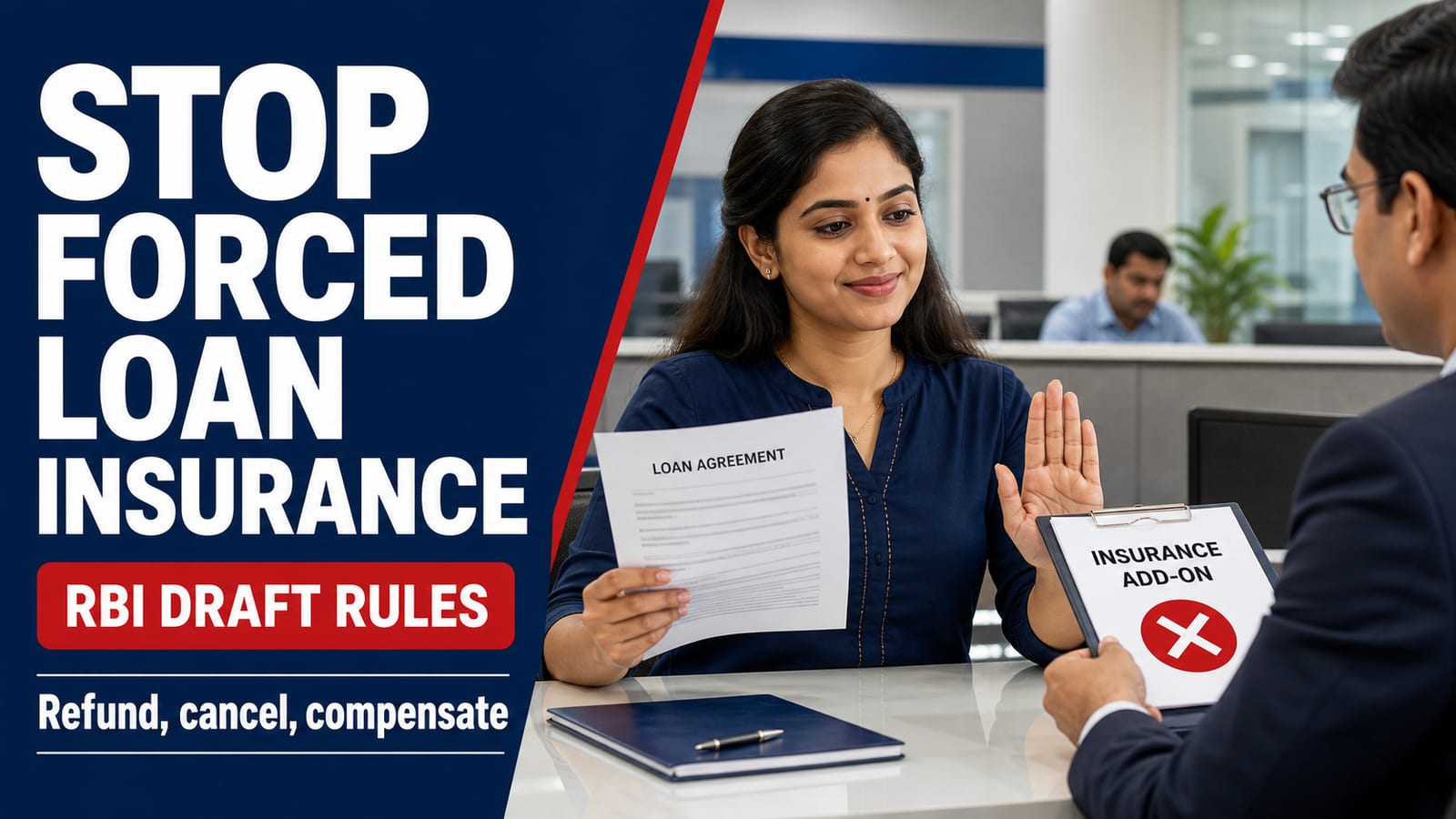
Under RBI directions, commercial banks are strictly prohibited from making loan approvals conditional upon purchasing third-party insurance or ULIPs. If risk insurance is required for a loan, borrowers must be allowed to choose their own insurance provider.

Full refund and interest compensation

When mis-selling or forced bundling is established, banks are required to provide a 100% full refund of the product premium and charges, plus accrued interest compensation (calculated at 9% p.a. simple interest under Ombudsman guidelines).

RBI Integrated Ombudsman claim limits (RB-IOS 2026)

Under the same draft directions, the RBI Integrated Ombudsman framework provides a streamlined grievance mechanism allowing compensation up to ₹30 Lakh for direct financial losses incurred due to bank mis-selling. Until final notification, complaints run through the existing RB-IOS and consumer-court routes, where outcomes rest on the evidence rather than a codified formula.

What the numbers actually mean for you

The 'approval needs insurance' lie, priced

The pattern is depressingly standard: loan approval is stalled until you sign a bundled ULIP or endowment policy, often with the premium quietly financed inside the loan itself, so you pay interest on the product you never wanted. RBI rules have long said bundling cannot be a condition of credit; the draft 2026 directions add teeth by hard-wiring refund plus 9% interest as the remedy. The 9% is deliberately punitive: it roughly matches what the money would have earned deployed against the loan itself, so the bank gains nothing by having held it.

The draft status matters and this page does not hide it: until final notification, complaints for pre-2026 sales run through the existing Banking Ombudsman and consumer-court routes, where outcomes depend on evidence rather than a fixed formula. The calculator shows what the codified regime pays; treat it as the ceiling of a well-documented claim. Either way the RB-IOS route is free to use and requires no lawyer, which is precisely why banks prefer complainants who never file.

Evidence beats outrage: what actually wins these cases

Winning complaints share a paper trail: the sanction letter (showing no insurance requirement), the policy sold the same week as disbursal, premium debited from the loan account, and ideally any message where staff linked approval to the purchase. Same-day timestamps between loan and policy are the single most persuasive artifact, because no plausible story explains a borrower independently choosing a ULIP at the disbursal desk.

Sequence matters too. The RB-IOS route requires you to complain to the bank first and give it 30 days; filing with the ombudsman early gets the complaint bounced on procedure, not merits. Bank first, 30 days, then escalate with the reference number, and keep that reference number, every later forum will ask for it.

The bancassurance engine behind it

Branches sell insurance because commissions on bundled policies can dwarf the margin on the loan itself, and targets flow downhill to the loan officer facing you. Knowing that changes the conversation: 'is this policy a condition of sanction, and will you put that in writing?' is a question no branch will answer yes to on paper.

If you genuinely want credit-linked insurance, buy a plain term policy for the loan amount separately; it typically costs a fraction of the bundled ULIP and pays the loan off just the same. The bundled product's job is the commission, not your protection.

And if the pressure comes anyway, slow the transaction down in writing: an email asking the branch to confirm the insurance requirement creates exactly the evidence a future complaint needs, and more often than not makes the 'requirement' evaporate on the spot.

The double hit nobody itemises: interest on the mis-sold premium

When the branch finances the forced premium inside the loan, you are not just out the Rs 1,50,000, you are paying home-loan interest on it for up to twenty years. At 9% over a 20-year tenure, a financed Rs 1,50,000 premium quietly costs roughly Rs 1,74,000 in additional interest on top of the premium itself, more than doubling the true damage.

Your complaint should say so explicitly: quantify the premium, the debited hidden fees, AND the loan interest attributable to the financed premium since disbursal. Ombudsman awards work from the loss you can document, and most complainants leave the largest line item off the table simply because it never appears as a separate charge on any statement.

There is also a live product decision hiding here: if the ULIP is still active, surrendering it early usually triggers its own charges and locks in poor returns, while keeping it muddies the 'forced purchase' narrative. The cleaner sequence is to file the complaint first, state that the policy was never wanted, and let the resolution dictate the surrender, several settlements include unwinding the policy at full premium refund as part of the award.

How the compensation math works

Under the draft RBI Responsible Business Conduct Directions expected to take effect from July 2026, a borrower forced to buy insurance as a loan condition can claim the full premium back, plus hidden processing fees, plus 9% a year simple interest for the time the bank held the money, capped at the RB-IOS ombudsman ceiling of Rs 30 lakh.

The calculator adds your forced premium and hidden fees, applies the 9% clock for the months elapsed, and shows the claim against the cap.

Calculation Steps:

  1. Enter the insurance or ULIP premium you were compelled to buy at loan origination, plus any processing fees never disclosed in the sanction letter.
  2. The two are summed as the base mis-sold amount, the figure every later step builds on.
  3. Simple interest of 9% a year is added for the months since the transaction.
  4. The total is capped at Rs 30,00,000, the RB-IOS statutory maximum per complaint.

Worked example

Ravi took a Rs 25 lakh home loan, and the branch made 'approval' contingent on a Rs 1,50,000 single-premium ULIP plus Rs 25,000 of fees that never appeared in the sanction letter. Nothing about his file required either product; the loan had already cleared credit assessment on its own merits.

His base mis-sold amount is Rs 1,75,000, real money extracted as the price of a loan he had already qualified for.

Twelve months later, penalty interest adds Rs 1,75,000 x 9% = Rs 15,750, taking the claim to Rs 1,90,750, comfortably inside the Rs 30 lakh cap and large enough that ignoring it means gifting the bank two months of a decent salary.

The forced-insurance ratio also matters: at 6% of the loan amount, the premium is far above anything justifiable as voluntary, which is precisely the evidence pattern the draft directions target.

Input definitions

Review the glossary of terms used in the calculation model below. Click on highlighted links to read more in-depth definitions in our financial glossary:

ParameterDefinition & Context
Loan AmountThe sanctioned loan. Used to compute the forced-premium-to-loan ratio, a red flag in mis-selling complaints.
Forced Insurance PremiumPremium for a policy you were told was required for approval. Tying approval to insurance purchase is the core prohibited conduct.
Hidden Processing FeesCharges debited at disbursal that never appeared in the sanction letter or key facts statement.
Months ElapsedTime since the transaction; drives the 9% p.a. simple-interest penalty on your claim.
Built & MaintainedBuilt by Galvin Mendonca, Finance Researcher
All figures from primary government sources. Last updated July 2026.

Frequently Asked Questions

You Might Also Like

View All

Sources & references

The rules and figures on this page are researched from official primary sources:

Disclaimer: All calculations are estimates based on current statutory data and user inputs. Tax rates, retirement regulations, contribution limits, deduction thresholds, and investment fees change over time and vary by jurisdiction. This calculator does not constitute financial, investment, tax, or legal advice. Always verify critical values with an official professional advisor or reference the official government publications cited above before making any financial decisions.