The 7 PM Line in the Sand: Active Rules and the 2026 Regulatory Environment
If you have ever received a loan recovery call at 9 PM, been threatened by an agent who refused to identify themselves, or had your relatives contacted about an overdue EMI, the Reserve Bank of India has clear standards governing debt recovery conduct.
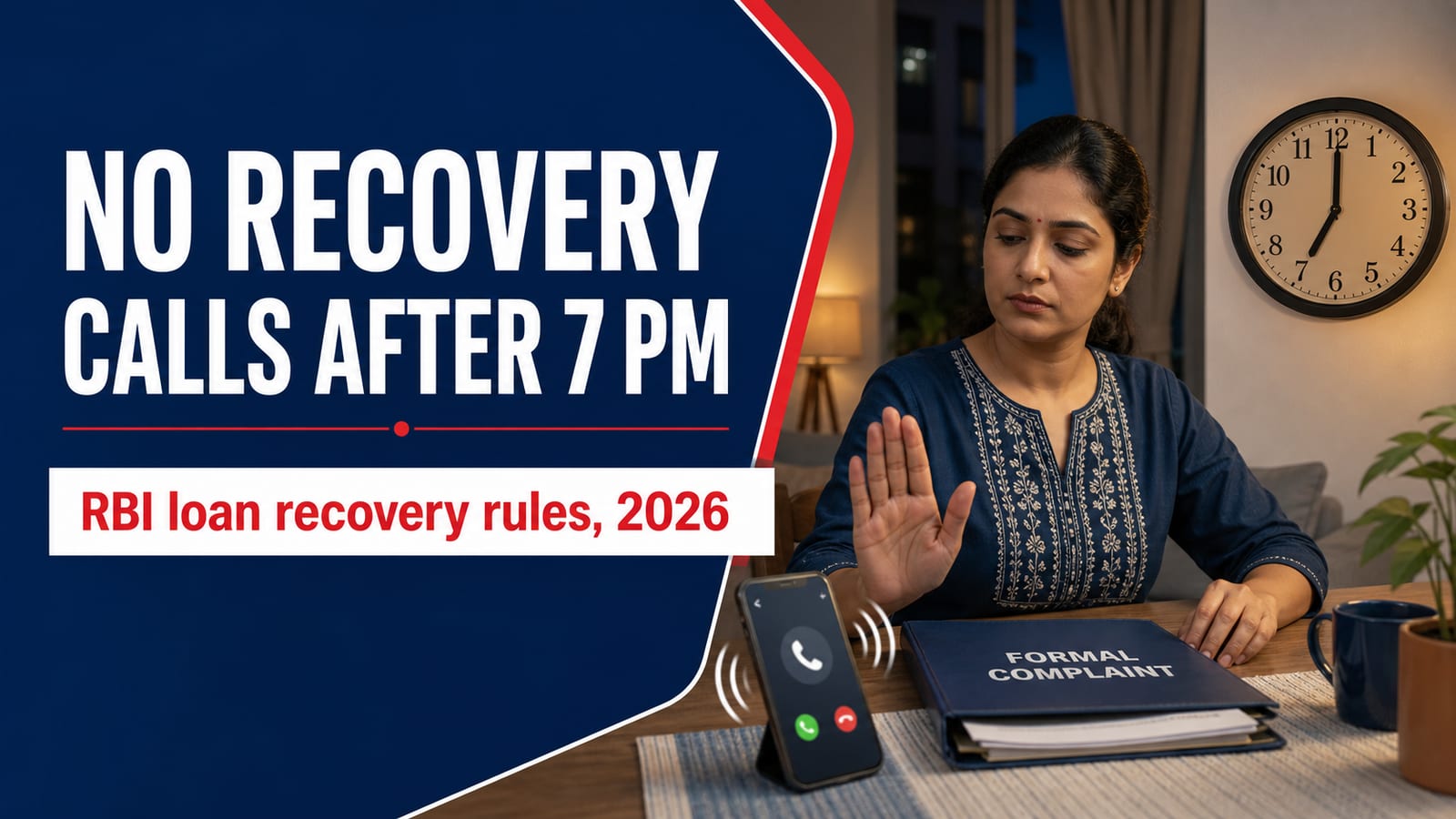
A common misconception is that the 8:00 AM to 7:00 PM contact restriction is a brand-new 2026 creation. In reality, the RBI explicitly banned recovery calls before 8 AM and after 7 PM four years ago, under its August 12, 2022 circular (RBI/2022-23/108: Outsourcing of Financial Services - Responsibilities of regulated entities employing Recovery Agents). Any recovery call, SMS, or visit made at 7:01 PM is an active regulatory violation under existing law.
What is currently underway in 2026 is a major regulatory consolidation. Following an initial draft issued in February 2026, the RBI released Revised Draft Amendment Directions on May 20, 2026 (with public consultation open through May 31, 2026). This consolidated framework reinforces the 2022 calling window, mandates strict IIBF certification for all recovery personnel, requires complete call recording preservation, and institutes direct vicarious liability for lenders. While the final Master Direction notification for the new 2026 provisions is currently pending, the core protections against harassment are active and fully enforceable today through the RBI Integrated Ombudsman Scheme.
This guide breaks down your rights under existing 2022 rules, explains the pending 2026 consolidated framework updates, walks you through how to verify an agent, and gives you a step-by-step complaint escalation path.
The Complete Rule Set: Borrower Rights and Lender Mandates
The RBI's recovery framework addresses loan recovery practices across six critical dimensions. Here is every rule that directly affects you as a borrower.
1. The 8 AM to 7 PM Contact Window (Active Law Since August 2022)
Under RBI Circular RBI/2022-23/108, recovery calls and physical visits are permitted strictly between 8:00 AM and 7:00 PM. This applies to:
- Phone calls (landline and mobile)
- SMS and WhatsApp messages
- Physical visits to your home or workplace
- Contact through any digital channel
The only exception: if you, the borrower, specifically agree in writing to different hours. A verbal "sure, call me anytime" does not count. The agreement must be documented in writing.
2. Mandatory IIBF Certification (2026 Framework Standard)
Every recovery agent engaged by a bank or NBFC must hold a valid certificate from the Indian Institute of Banking and Finance (IIBF). Lenders are required to ensure all recovery personnel undergo mandatory IIBF training and certification.
When a recovery agent contacts you, you have the right to ask for their IIBF certification number. If they cannot provide it, they are not authorised to conduct recovery operations on behalf of the lender.
3. Written Notice Before Agent Assignment
Banks must inform borrowers in writing about the identity of the assigned recovery agent before the agent makes first contact. This notice must include:
- The agent's name and IIBF certification number
- The bank's authorisation reference
- The agent's contact details
- Your right to verify the agent's credentials with the bank
If an agent contacts you without prior written notice from the bank, that is a procedural violation.
4. Call Recording and Record Preservation
Lenders must document the timing, frequency, and content of all recovery calls made by employees or third-party agents. Call recordings must be preserved and made available for regulatory inspection. If you dispute a call's timing or tone, the bank must produce the recording.
If an agent calls you at 8:30 PM and the bank cannot produce a recording showing otherwise, the Ombudsman complaint stands in your favour.
5. Published Agent Lists
Banks and NBFCs must publish their official lists of authorised recovery agents on their websites. This allows you to independently verify whether the person contacting you is legitimately engaged by your lender.
6. Strict Ban on Harassment and Coercion
Under the RBI Fair Practices Code, lenders and their agents are explicitly barred from:
- Using abusive, threatening, or intimidating language
- Contacting a borrower's relatives, friends, neighbours, or employer regarding the debt
- Excessive or repeated calls intended to harass
- Threats of physical harm or false legal claims
- Entering a borrower's premises without consent or public shaming of any kind
Under RBI rules, lenders are directly liable for the misconduct of their outsourced agents. "The agent was an independent contractor" is legally invalid as a defense.
Case Study: Priya's Evening Call That Crossed the Line
Priya is a 29-year-old graphic designer in Pune with a personal loan of ₹3,50,000 from a private bank. She missed two EMI payments after losing a freelance client. Here is what happened and how the rules protect her.
The Incident
At 8:15 PM on a Tuesday, Priya received a call from a recovery agent. The agent:
- Did not identify himself by name or IIBF certification number
- Threatened to "inform her neighbours" about the overdue loan
- Called three more times between 8:15 PM and 9:30 PM
- Sent a WhatsApp message at 10 PM saying "pay tomorrow or face consequences"
Priya's evening: five contacts, zero inside the legal window
The Violations
| Rule | Violation |
|---|---|
| 8 AM–7 PM window | Call at 8:15 PM — violation of active 2022 RBI calling hours |
| IIBF certification | Agent failed to provide certification number |
| Written notice | Priya received no prior written notice of agent assignment |
| Harassment ban | Threat to contact neighbours — prohibited under Fair Practices Code |
| Excessive calls | Four calls in 75 minutes — constitutes illegal harassment |
| Call recording | Bank must produce recordings; failure to do so upholds the complaint |
Priya's Action Plan
- Priya files a written complaint with her bank's Principal Nodal Officer, citing the specific rule violations.
- The bank must acknowledge the complaint and review agent conduct.
- If unresolved within 30 days, Priya escalates to the RBI Banking Ombudsman (cms.rbi.org.in).
- The Ombudsman can direct the bank to pay compensation for harassment and impose regulatory penalties.
Who Is Covered and Who Is Not
Covered by RBI Recovery Norms
- All scheduled commercial banks (public and private sector)
- All NBFCs registered with the RBI
- All recovery agents (in-house or outsourced) engaged by banks/NBFCs
- Regulated digital lending apps operating as NBFCs or with NBFC partners
NOT Covered
- Unregulated peer-to-peer lenders operating without RBI NBFC registration
- Informal private moneylenders (governed by state money-lending laws)
- Court-ordered recovery proceedings (which follow formal judicial procedure)
How to Verify a Recovery Agent: The 60-Second Check
When a recovery agent contacts you, run through this checklist:
- Ask for their full name and IIBF certification number.
- Ask for the bank's written authorisation reference number.
- Verify the agent against the bank's published list of authorised agents on its official website.
- Call your bank's customer care to confirm the agent assignment.
- Note the exact time of contact. If before 8 AM or after 7 PM, it is an automatic violation under the 2022 circular.
- Do not share financial or personal details until credentials are verified.
The Complaint Escalation Ladder
Level 1: Bank Nodal Grievance Redressal
File a formal written complaint with your bank's Principal Nodal Officer. Provide:
- Date, exact time, and phone number of the contact
- Description of the violation (calling outside 8 AM–7 PM, threats, third-party contact)
- Request for call recording logs
Level 2: RBI Banking Ombudsman (Integrated Ombudsman Scheme)
If the bank fails to resolve your complaint within 30 days or rejects your claim, escalate online via the RBI Complaint Management System at cms.rbi.org.in.
The Ombudsman can:
- Direct the lender to pay financial compensation for harassment
- Direct the lender to halt illegal recovery actions
- Issue regulatory warnings and penalties against the bank
Level 3: Consumer Disputes Redressal Commission
For severe harassment involving physical threats or public humiliation, file a petition under the Consumer Protection Act, 2019 (District Commission up to ₹50 lakh; State Commission ₹50 lakh to ₹2 crore).
Consumer court monetary jurisdiction for harassment claims
The Bottom Line
The 8:00 AM to 7:00 PM contact window is an active regulatory requirement established in August 2022, while the upcoming 2026 consolidated Master Direction (following the May 2026 revised draft) further tightens IIBF mandates and call recording standards. Know your rights, verify every agent who contacts you, and escalate to the RBI Ombudsman if a lender or agent crosses the line.